A new analysis from 5 Lakes Energy examines the measurable economic and fiscal impacts of wind and solar development in Isabella County.
For communities navigating the opportunities and challenges associated with renewable energy development, having access to reliable, local data is essential.
That is why the Middle Michigan Development Corporation (MMDC) engaged 5 Lakes Energy to conduct an independent analysis of publicly available tax, assessment and economic data to examine the five-year economic impacts of renewable energy development in Isabella County.
The result is a data-driven look at how renewable energy development has contributed to local property tax revenues, education funding and landowner income since 2019.
More than $37 million in property tax revenue
One of the most significant findings is the amount of property tax revenue generated by renewable energy projects in Isabella County.
According to the 5 Lakes Energy analysis, DTE has paid more than $37 million in property taxes to taxing entities within Isabella County since 2019.
Those revenues have not gone to a single entity. The county government and local school districts are among the largest recipients, with educational institutions receiving a particularly significant share of the revenue.
Wind-related property taxes accounted for approximately 10% to 17% of total county property tax revenue during the study period.
For a rural community, those revenues represent an important contribution to the local tax base and help support the public services and institutions that residents rely upon.
Supporting education
The analysis also highlights the substantial role renewable energy tax revenue plays in supporting education throughout Isabella County.
School districts and educational entities were among the largest beneficiaries of renewable energy property taxes. The report specifically identifies school debt, special education and school operations millages as receiving some of the largest portions of these tax dollars.
This means the impact of renewable energy development extends beyond the properties where turbines or solar installations are located. Tax revenues are distributed through the county's existing taxing structure, supporting educational investments across the community.
A source of income for participating landowners
The economic impact identified in the report also extends to private landowners hosting renewable energy infrastructure.
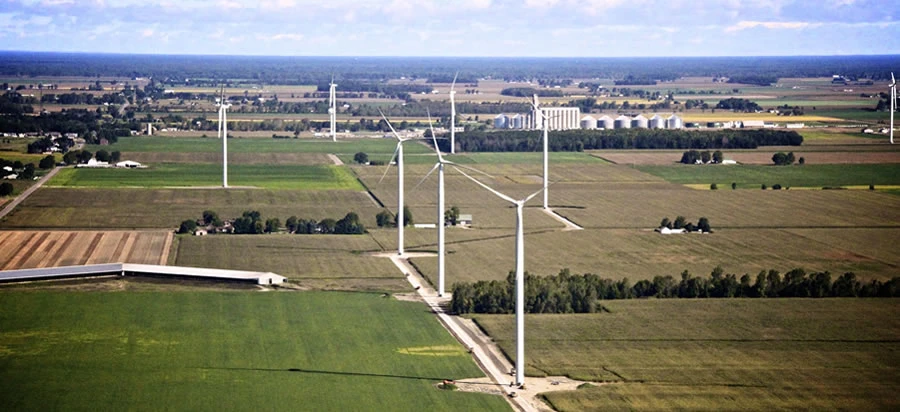
While individual lease agreements vary and are generally subject to nondisclosure agreements, 5 Lakes Energy estimates that landowners hosting the 172 wind turbines in Isabella County receive between $1.2 million and $3.8 million annually in lease revenue.
Those payments represent another potential source of economic activity in the community, depending on how participating landowners use the income.
The renewable energy landscape is changing
The study also points to an important shift in Isabella County's renewable energy portfolio.
In 2025, Mission Road Solar Park began paying property taxes in the county. The project added approximately $500,000 in additional property tax revenue that year.
The analysis notes that solar assets generally depreciate more slowly than wind assets because of longer project operating periods and the state's valuation approach. As a result, solar development may provide a more stable property tax contribution to local taxing jurisdictions over time.
This diversification is significant as communities consider the long-term fiscal impacts of renewable energy investments.
Why local data matters
Renewable energy development remains a complex and sometimes controversial issue in rural communities.
MMDC's goal in commissioning this analysis was not to tell residents or policymakers what decision to make. Instead, the goal was to provide objective, locally relevant information that can help inform those decisions.
The completed analysis provides local governments, public officials, community partners and residents with information about property tax revenues, educational funding, county finances and landowner lease income associated with renewable energy development.
Economic development is, at its core, about understanding the resources available to a community and making informed decisions about its future. Reliable data is an important part of that process.
Continuing the conversation
The five-year analysis conducted by 5 Lakes Energy provides a factual foundation for continued conversations about renewable energy and economic development in Isabella County.
The findings don't answer every question and they aren't intended to. Rather, they provide a clearer picture of the measurable economic and fiscal impacts that have occurred since renewable energy development began contributing to the county's tax base.
More than $37 million in property tax revenue. Millions of dollars in estimated annual landowner lease payments. Significant support for education and other local taxing entities. And a growing mix of wind and solar development.
For MMDC, making this information accessible is part of our commitment to strengthening regional economic prosperity through research, education and informed decision-making.
We encourage community leaders, residents and stakeholders to review the full analysis and use the data as one resource in the ongoing conversation about Isabella County's economic future.
This report was made possible through grant funding provided by the Windward Fund and the Rural Climate Partnership.